How to Plan a Tech Meetup or Hackathon in Seattle
Seattle has one of the most active tech communities in the country. Between the established giants and the startup scene pushing out of South Lake Union and Capitol Hill, there's real demand for well-run meetups, hackathons, and developer nights. But a lot of these events fall flat — not because of the people, but because of poor planning. Here's how to do it right.
Start With the Right Venue Size
The most common mistake organizers make is booking a space that's either too small to breathe in or so large it kills the energy. For tech events specifically, you need to think about more than just headcount. Factor in workstations, whiteboard space, breakout areas, and whether people will be standing, sitting, or cycling between both throughout the event.
A general rule: for a casual meetup of 50–80 people, you want a venue that doesn't feel like a fire hazard but also doesn't feel like a conference hall. For a hackathon running 100–200 participants, you need room for teams to spread out, store gear, and work for extended periods without friction.
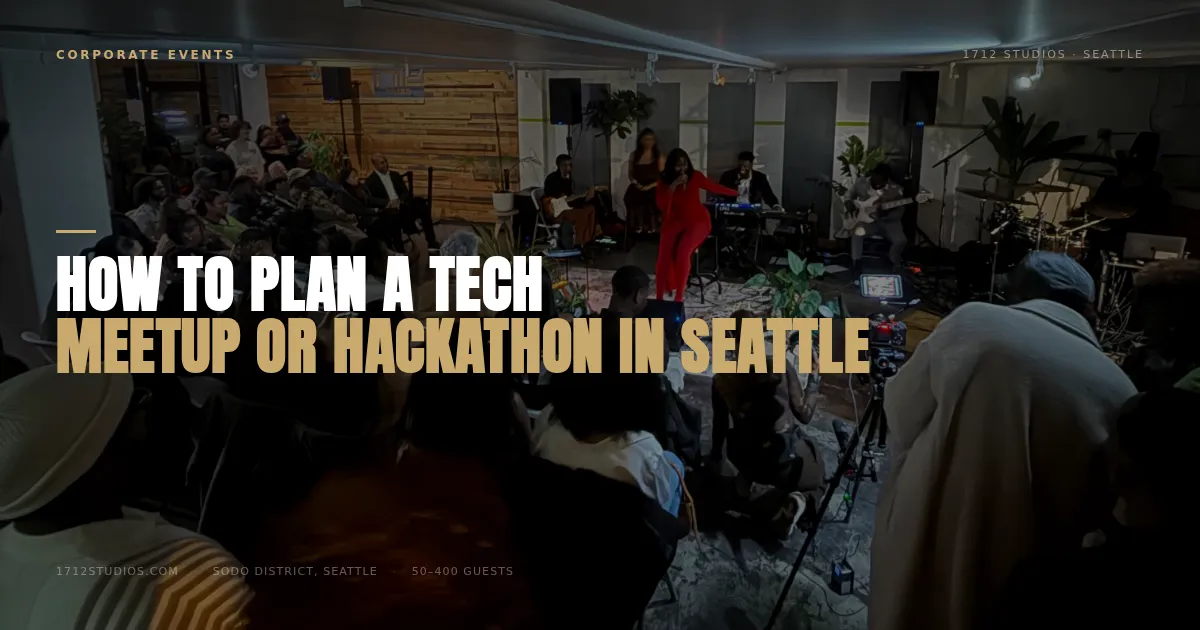
1712 Studios in Seattle's SODO district handles this range well — the space runs 6,000 square feet and accommodates 50 to 400 guests depending on the layout. That kind of flexibility matters when your RSVP count shifts two weeks before the event, which it always does.
Think About Infrastructure Before Anything Else
Sound and Presentation
Tech events almost always involve presentations, panels, or lightning talks. You need reliable audio — not a Bluetooth speaker someone brought from home. Make sure the venue has a proper sound system and the ability to connect a laptop or run slides without a 20-minute setup ritual. A built-in DJ booth or AV console is a bonus if you're planning any after-event social time.
Parking and Access
This sounds obvious, but it matters more in Seattle than in most cities. Attendees driving in from Bellevue, Redmond, or the Eastside need somewhere to park. Events that require a 10-minute walk from a paid garage start bleeding RSVPs fast. Look for venues that include parking — it's one less friction point for people deciding whether to show up.
Late-Night Availability
Hackathons especially need flexibility on time. If your event wraps at midnight or runs a demo session that goes long, you don't want to be kicked out at 10pm. Some venues close early or charge heavily for extended hours. 1712 Studios is available until 2am, which gives you genuine breathing room for events that need it.
Plan Your Agenda Around Energy, Not Just Time
A poorly paced event loses people fast. For meetups, keep talks to 20 minutes or under and build in social time before and after. For hackathons, structure the day around clear checkpoints — kickoff, mid-event check-in, and demo session — so teams have external pressure to stay on track.
Food and drink timing matters too. Don't feed people right before a keynote. Don't run a three-hour working session without any break. These seem like small things, but they're the difference between an event people remember and one they leave early.
Budget Transparently
Hidden fees are the fastest way to blow a tech event budget. Some venues charge separately for tables, chairs, AV equipment, setup time, or staff. Get a full breakdown in writing before you commit. All-inclusive pricing — where tables, chairs, sound, and parking are wrapped into one number — makes it much easier to present a clean budget to sponsors or stakeholders.
1712 Studios operates on a no-surprise-fees model with all-inclusive pricing, which is worth knowing if you're putting together a sponsor deck and need to show real costs upfront.
Logistics Checklist Before You Book
Before signing anything, confirm these items with your venue: minimum rental hours (know your actual event length plus setup and teardown), capacity range that fits your expected turnout, what's included versus what costs extra, whether the venue has experience with tech-style events, and what the cancellation or rescheduling policy looks like.
The four-hour minimum at most professional venues is standard — just make sure you're accounting for setup time in that window, not just the event itself.
Make It Easy for People to Come Back
The best tech meetups in Seattle have become recurring institutions because the organizers treated logistics as seriously as the content. When the space works, the AV works, and people can find parking, attendees focus on the reason they showed up. That's what builds community over time.
If you're planning a tech event in Seattle and want to see whether the space fits, reach out to 1712 Studios at 1712studios.com or call (206) 594-4809. The venue is at 1712 1st Ave S in SODO — worth a walkthrough before you commit to anything.
