Corporate event planning looks simple until you're three weeks out and your first-choice venue is booked, your AV vendor just raised their rate, and catering has a six-week waitlist. The fix isn't luck — it's sequencing. Book the right things in the right order, and everything downstream gets easier.
This timeline works for conferences, company parties, product launches, client dinners, and team off-sites. Adjust the lead times based on your event size, but treat this as your floor, not your ceiling.
6–9 Months Out: Lock in the Venue First
Everything else in your planning depends on where you're holding the event. Catering, décor, entertainment, and logistics all change based on the space. Don't finalize anything else until the venue is signed.
At this stage, you're evaluating three things: capacity, included amenities, and total cost. Venues that look affordable upfront often carry hidden fees — rental add-ons for AV equipment, tables, chairs, or parking that push the final invoice 30–40% higher than quoted.
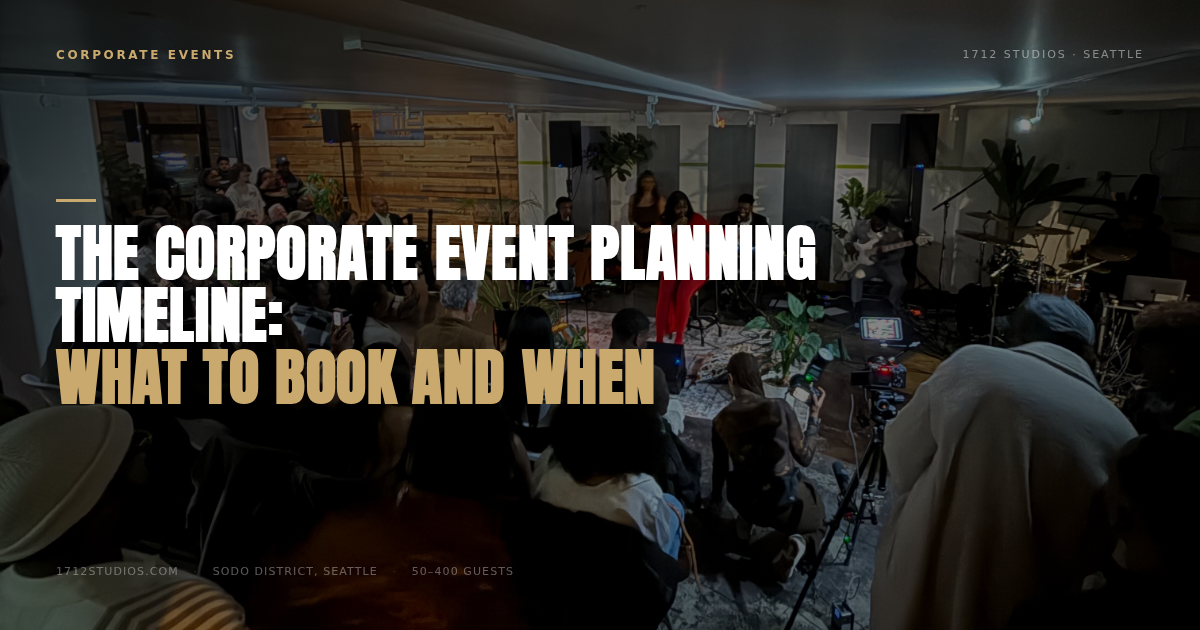
For Seattle corporate events, 1712 Studios in the SODO district is worth looking at early. The 6,000 sq ft industrial warehouse holds 50–400 guests, includes a full sound system, DJ booth, tables, chairs, and parking in the base price — no surprise fees. That kind of all-inclusive pricing makes budget forecasting straightforward, which matters when you're presenting costs to a finance team.
Once the venue is signed, you have a real anchor for every other decision.
4–6 Months Out: Secure Your Core Vendors
With the venue confirmed, move immediately on the vendors that book earliest: catering, photography/videography, and any live entertainment. These are your longest lead-time items in any market, and Seattle is competitive.
Catering
Good corporate caterers with experience in larger events — 100+ guests — routinely book out four to six months in advance. Get three quotes, check references specifically for corporate clients, and confirm they've worked in your venue before or are willing to do a site visit.
Photography and Video
If you're documenting the event for internal use, a case study, or social content, experienced event photographers book fast. Locking this in at the four-month mark gives you options. Waiting until six weeks out usually means taking whoever's available.
Entertainment
Keynote speakers, bands, and DJs all work from limited calendars. If live music or a name speaker is part of your program, treat this with the same urgency as the venue itself.
2–3 Months Out: Handle the Logistics Layer
This is where planners who are behind start cutting corners. Don't. The two-to-three-month window is when you confirm transportation, finalize the run-of-show, and nail down any tech requirements your venue doesn't already cover.
Reach out to your venue contact to review layout options, load-in and load-out timing, and any restrictions on outside vendors. Venues like 1712 Studios — available until 2am with a 4-hour minimum — give you real flexibility on timing, but you still need to map out the schedule explicitly so staff, vendors, and guests aren't guessing on the day.
If you have a registration process, branded signage, or printed materials, initiate those now. Print timelines are longer than most planners expect.
4–6 Weeks Out: Confirmations and Contingencies
Send written confirmations to every vendor. Reconfirm headcount with your venue so they can plan accordingly. If your guest count has shifted significantly, flag it now — not the week before.
Build a contingency list. What happens if a vendor cancels? Who's your backup contact at the venue? What's your inclement weather protocol if any portion of the event is outdoors? Having answers to these questions before the event is always better than finding them during.
1–2 Weeks Out: Run the Details
Walk the venue. Walk it with your AV team, your catering contact, and your event lead. Don't assume anything translates from a floor plan to a live space without seeing it in person.
Distribute a final run-of-show to everyone involved — vendors, staff, and internal stakeholders. The more people who know the schedule cold, the fewer fires you're putting out on event day.
The Short Version
Start earlier than you think you need to. Book the venue before anything else. Secure long-lead vendors inside six months. Use the final stretch for confirmations and contingencies, not decisions.
If you're planning a corporate event in Seattle and want a venue that keeps the logistics straightforward, visit 1712studios.com or call (206) 594-4809 to check availability. The earlier you reach out, the more options you'll have.