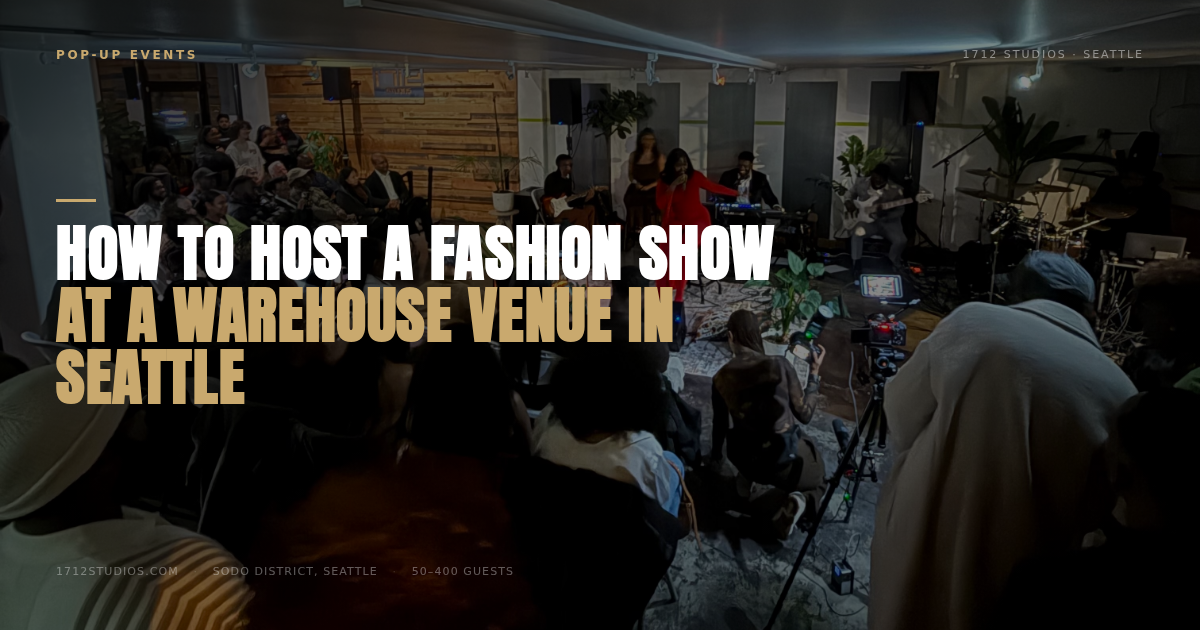
Warehouse venues have become the go-to backdrop for fashion shows in Seattle, and for good reason. The raw architecture, high ceilings, and open floor plans give designers and stylists a neutral canvas that doesn't compete with the clothing. But pulling off a fashion show in a warehouse requires more than just showing up with a rack of garments. Here's what you need to think through before the first model hits the runway.
Choose a Space That Can Handle the Logistics
Fashion shows have a surprising number of moving parts: a runway, seating on both sides, a backstage area for models and stylists, a sound system for music, and enough space for photographers to work without crowding guests. That means you need more square footage than most people initially budget for.
A 6,000 sq ft warehouse like 1712 Studios in Seattle's SODO district gives you enough room to build out all of these zones without the event feeling cramped. With capacity up to 300 guests and flexible open floor space, you can design a runway configuration that actually lets your pieces be seen, not just shuffled past a wall of standing attendees.
Runway Layout and Staging
Standard Runway Configurations
The most common runway setups are the straight runway (also called the T-runway), the loop, and the box stage. For warehouse venues, the straight T-runway tends to work best. It creates a clear focal point, allows seating on three sides, and photographs well from multiple angles. Plan for a runway that's at least 20 to 30 feet long and 4 to 6 feet wide to give models room to walk confidently and turn.
Backstage and Model Prep Area
This is the piece most first-time organizers underestimate. Your models need a private, well-lit space to change, get touched up, and stage in order before their walk. In a warehouse setting, you can section off a corner of the venue using pipe and drape or modular partitions. Make sure this area has access to power for hair tools and mirrors, and that it connects to the runway without models crossing through the guest area.
Lighting Makes or Breaks the Show
Warehouse lighting is dramatic by default, but fashion show lighting has specific demands. You want clean, directional light on the runway so the garments read clearly, both in person and in photos. Avoid heavy colored washes over the runway itself; save those for the ambient room lighting. Front-facing white or warm-white spotlights along the runway length will do more for your show than any elaborate light show.
If you're working with a venue that doesn't have existing theatrical lighting infrastructure, budget for a lighting rental and bring in someone who knows how to rig it properly. Ceiling height matters here, warehouses with 18 to 20 foot ceilings give you the clearance to hang and angle fixtures correctly.
Sound Setup for a Fashion Show
Music drives the energy of a runway show. You need a sound system that delivers clean, powerful audio throughout the entire room, not just near the DJ booth. A full-range system with subwoofers and distributed speakers is standard for this type of event. 1712 Studios includes a professional sound system and DJ booth in their venue rental, which removes one major variable from your vendor list and keeps your budget predictable.
Work with your DJ or music director ahead of time to map out the transitions between looks. Each segment of the show should have its own energy, and tight audio cues are what separate a polished show from an awkward one.
Guest Experience and Seating
Seating arrangement affects how guests perceive the show. Chairs lined along both sides of the runway create an intimate, industry-standard feel. If you're mixing standing room with seated sections, keep the front rows reserved for press, buyers, or VIPs. Consider aisle management, guests should not be crossing the runway before the show begins.
Parking is also worth factoring into the guest experience, especially in Seattle where street parking is limited. Venues in SODO like 1712 Studios include on-site parking, which takes one logistical headache off your plate entirely.
Permits, Timing, and Practical Details
Seattle doesn't require a special permit for a private fashion show inside a licensed venue, but you should confirm capacity limits and any noise ordinances with your venue contact before you finalize the guest list. Build in setup time, fashion shows typically need 4 to 6 hours of load-in before doors open. Make sure your venue rental includes enough time for both setup and breakdown without rushing.
Ready to Book Your Runway?
If you're planning a fashion show in Seattle and need a venue that can handle the scale, the sound, and the setup without surprise fees, reach out to 1712 Studios directly. Visit 1712studios.com to check availability or call (206) 594-4809 to talk through your event details.