Most networking events fail for the same reasons. The invite goes out too late. The venue feels like a conference room someone forgot to decorate. There's nothing to do when you first walk in, so people stand near the wall and check their phones. And then the host wonders why attendance dropped off.
Here's the reality: people have a lot of options for how to spend a Tuesday evening. If your event doesn't give them a clear reason to show up — and a good experience when they do — you'll keep fighting the same uphill battle. This guide fixes that.
Start With a Real Reason to Attend
A generic "come network with professionals in your industry" pitch doesn't move anyone. People need a specific hook. That could be a panel discussion, a guest speaker, a product launch tied to the event, or even just a theme that makes the experience feel curated instead of thrown together.
Ask yourself: if you removed all the networking language from your invite, would anyone still want to come? If the answer is no, build something worth attending first. The networking happens naturally once you have people in a room who actually want to be there.
Get the Invite Right
Send Early, Remind Often
Four to six weeks out for your first invite is not too early. People's calendars fill up fast, and you want to be on the schedule before the competition. Send a reminder two weeks out, then again three to four days before the event. That last reminder is often what converts a maybe into a yes.
Make the Details Easy to Find
Date, time, address, parking situation, what to expect when they arrive — put all of it in the invite. The fewer questions someone has to answer before RSVPing, the more likely they are to actually do it. If they have to email you to find out where to park, you've already lost some of them.
The Venue Does More Work Than You Think
People make a snap judgment the moment they walk in. A great venue signals that you took this seriously. A bad one signals the opposite, and that feeling sticks with your attendees longer than anything you say from the front of the room.
For mid-to-large networking events, an industrial or open-floor-plan space tends to work better than a traditional event hall. The layout encourages movement and organic conversation instead of locking people into rows of chairs.
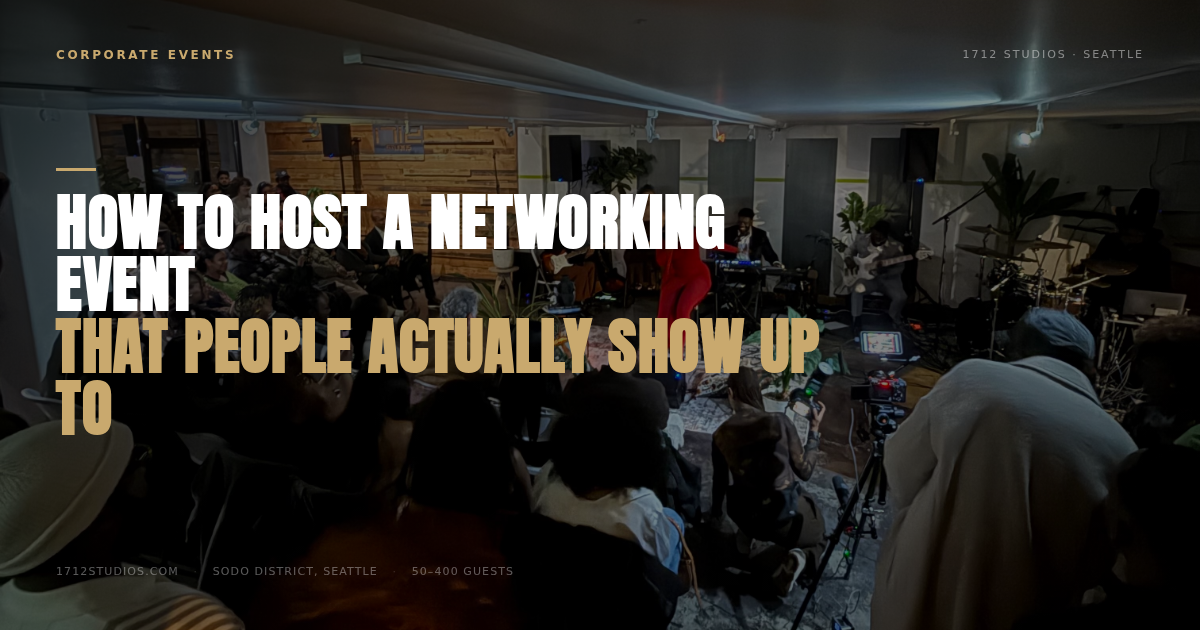
1712 Studios in Seattle's SODO district is a good example of this done right. It's a 6,000 square foot industrial warehouse space that can handle anywhere from 50 to 400 guests, with a full sound system, DJ booth, tables, chairs, and parking already included. There are no surprise fees — everything is baked into the pricing — which makes budgeting for your event straightforward. For a networking event that needs to feel like something, that kind of setup matters.
Structure the First 20 Minutes
The first 20 minutes of any networking event are the most awkward. People are arriving at different times, they don't know where to stand, and they haven't had a chance to warm up. Don't leave this window unplanned.
Have music playing at a good volume — loud enough to create energy, quiet enough that people can talk without leaning in. Have drinks or snacks available immediately upon entry, not 30 minutes in. And if you can, station a greeter at the door who introduces new arrivals to one or two people right away. That one small move dramatically reduces the "standing alone" problem.
Give People Something to Do
Pure open networking is hard for most people. Give your attendees a structured activity — a conversation prompt card at each table, a raffle that requires them to collect business cards, a brief icebreaker Q&A before the open floor. These aren't gimmicks. They're tools that make conversation easier to start, which is the whole point.
Follow Up the Next Day
An email the morning after — thanking attendees, sharing any resources mentioned, and teasing the next event — does two things. It closes the loop for people who came, and it plants a seed for people who didn't. Keep it short and useful. No one wants a three-paragraph recap of an event they just attended.
Put It All Together
A well-run networking event isn't complicated. It's just a series of small decisions made intentionally — the right venue, a clear reason to attend, a structure that makes connection easy. Get those pieces right and the room fills itself.
If you're planning a networking event in Seattle and need a space that can handle it properly, 1712 Studios is worth a look. They're located at 1712 1st Ave S in SODO, available until 2am, and set up for events from 50 to 400 people. Visit 1712studios.com to check availability or call (206) 594-4809 to talk through your event.