Pop-up markets are one of the best ways for Seattle vendors to build a customer base, move inventory, and test new products in front of a live audience. But a lot of vendors show up underprepared — not because they don't care, but because nobody hands them a real checklist. This is that checklist.
Before You Commit to a Venue
The venue decision shapes everything else. Get this wrong and no amount of great product will save you. Here's what to confirm before you sign anything or pay a deposit.
Space and Capacity
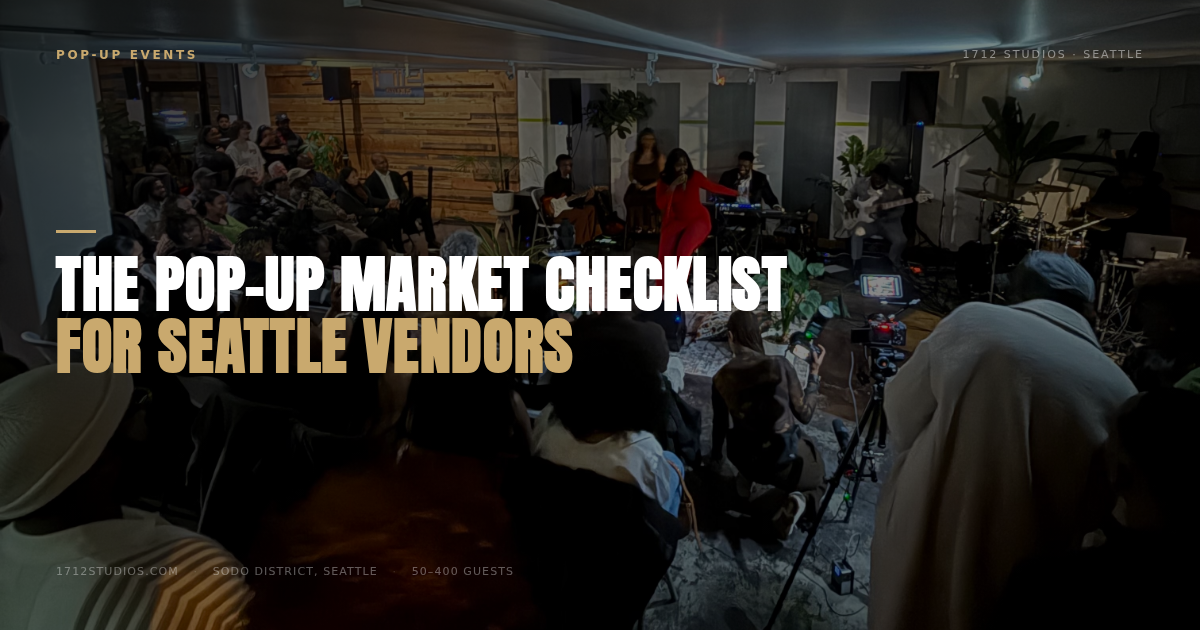
Know how many vendors are expected and how much floor space each one gets. A 6,000 sq ft warehouse like 1712 Studios in Seattle's SODO district can comfortably accommodate markets for 50 to 400 guests — that kind of range matters when you're projecting foot traffic and setting sales goals for the day.
Load-In and Load-Out Windows
Ask specifically: when can vendors start setting up, and how long do you have to break down at the end? Markets that give vendors less than an hour to load out are a nightmare. Confirm this in writing.
Parking
Your customers need to be able to get to you. Your van full of inventory needs to be able to reach the door. Venues that include dedicated parking — like 1712 Studios does — eliminate a real logistical headache, especially in a dense urban area like SODO.
Hidden Fees
Table rentals, chair fees, cleaning charges, overtime costs — these add up fast at some venues. Know the full cost before you commit. All-inclusive pricing means no surprises the day of the event.
Your Vendor Setup Checklist
Once the venue is confirmed, shift your focus to your own booth. Run through this list at least one week before the market.
Display and Signage
- Table covering that fits your brand
- Vertical display elements (risers, shelving, racks) to maximize visibility
- Clear, readable signage with your business name and social handles
- Price tags on every single item — don't make customers ask
Sales and Transactions
- Square, Venmo, or preferred card reader fully charged
- Cash float with small bills for change
- Printed or digital receipt option
- Email or SMS signup sheet for your list
Inventory and Packaging
- More stock than you think you'll sell — markets move fast
- Bags, tissue paper, or boxes for purchases
- Business cards or QR codes pointing to your online shop
Operations
- Extension cord and power strip if you need power
- Snacks and water for yourself — markets are long
- A helper if your booth is large or your products require explanation
- Phone charger and backup battery
Day-Of Logistics
Arrive earlier than you think you need to. Setup always takes longer than expected, and a rushed vendor setup shows. Give yourself at minimum 90 minutes before doors open to arrange your display, troubleshoot anything that doesn't look right, and actually breathe before customers walk in.
Introduce yourself to neighboring vendors. They'll tell you where the bathrooms are, whether the WiFi actually works, and which end of the room sees the most traffic. That intelligence is worth more than you'd think.
After the Market
Don't just pack up and go home. Take five minutes before you leave to do a quick debrief with yourself: What sold fastest? What didn't move? Did you run out of anything? Were your prices right? These notes are the foundation of a smarter market next time.
Follow up with everyone who signed up for your list within 48 hours. That momentum is real and it fades quickly.
Looking for a Venue to Host Your Next Market?
If you're an organizer looking to host a pop-up market in Seattle, 1712 Studios is worth a serious look. It's a 6,000 sq ft industrial warehouse at 1712 1st Ave S in SODO, available for events from 50 to 400 guests, with sound, tables, chairs, and parking all included. No surprise fees, available until 2am, with a 4-hour minimum.
Reach out at (206) 594-4809 or visit 1712studios.com to check availability and get a quote for your event.