Why Demo Day Planning Deserves More Attention Than You're Giving It
A startup demo day is one of the few events where the stakes are genuinely high for everyone in the room. Founders are pitching real ideas to real investors. First impressions matter. Logistics that go sideways — bad AV, not enough space, poor flow — don't just cause headaches. They undercut credibility at exactly the wrong moment.
Seattle has a healthy and growing startup ecosystem, especially in sectors like biotech, SaaS, aerospace, and climate tech. If you're organizing a demo day here, whether for a cohort of accelerator graduates, a university program, or an independent founder community, this guide will walk you through the decisions that actually matter.
Start With the Right Venue
The venue sets the tone before anyone speaks. You want a space that feels serious but not stuffy — somewhere that communicates ambition without being a hotel ballroom with dropped ceilings and carpeted floors.
Key things to look for in a Seattle demo day venue:
Capacity That Scales
Demo days vary wildly in size. A tight cohort event might have 50 people. A larger community showcase could draw 300 or more. Make sure your venue can handle your expected headcount without feeling either cramped or empty. A space that works at 100 guests but feels like a ghost town at 60 is going to hurt the energy in the room.
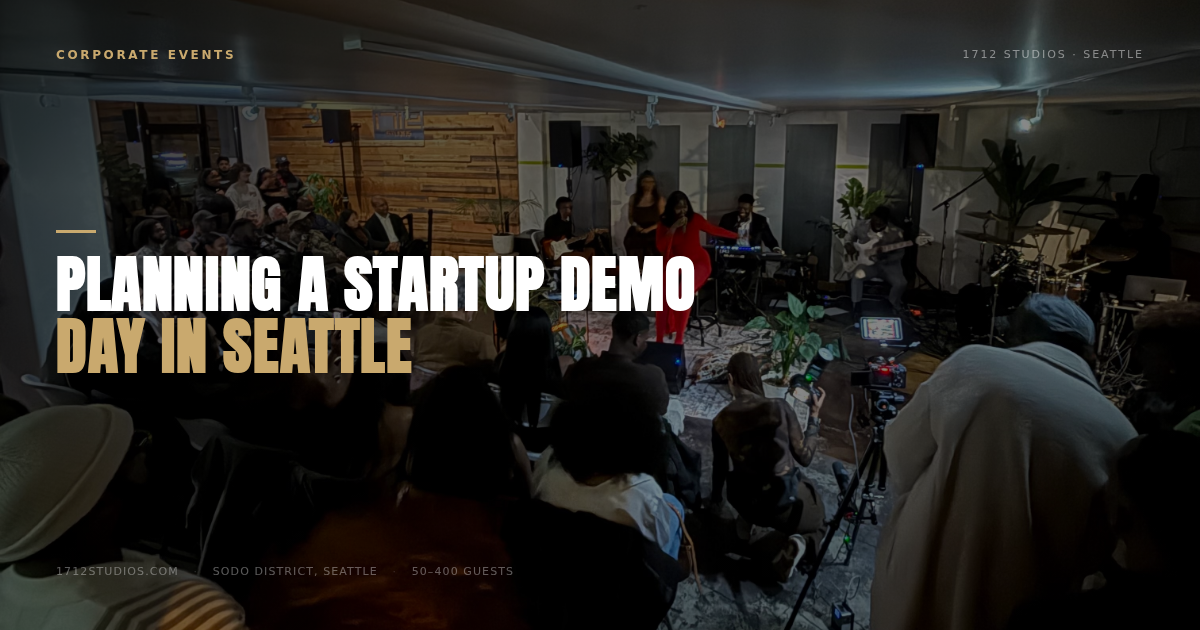
1712 Studios in Seattle's SODO district handles anywhere from 50 to 400 guests, which makes it a practical option whether you're running a small accelerator showcase or a larger multi-cohort event.
AV and Technical Infrastructure
This is non-negotiable. Founders need their slides to look sharp, their mics to work reliably, and the sound to reach every corner of the room. If you're demoing software or hardware products, you may also need reliable HDMI connections, strong WiFi, and enough power access for live demos.
Before you book any venue, confirm what's actually included in the rental. Some spaces charge separately for AV equipment, technicians, and setup time. Others include it. 1712 Studios, for example, includes a full sound system and DJ booth in their base pricing — no surprise line items when the invoice shows up.
Parking and Accessibility
Investors are busy. If getting to your event is a hassle — no parking, confusing location, limited transit access — some of them simply won't come. SODO is easy to reach from most parts of Seattle and offers parking without the chaos of downtown. That matters more than people think when you're trying to maximize attendance from people with packed schedules.
Structure the Day for Maximum Impact
The format of a demo day matters as much as the venue. Here's a structure that tends to work well:
Opening Block (30–45 minutes)
Start with networking. Give attendees time to arrive, grab a drink, and settle in before the pitches begin. Trying to start presentations the moment doors open is a mistake — you'll spend the first 15 minutes of your program competing with late arrivals.
Pitch Sessions
Keep individual pitches tight — 5 to 7 minutes per founder, with a hard stop enforced by a moderator. If you have more than eight or nine companies presenting, consider breaking them into two blocks with a short break in between. Investor attention fades faster than founders want to believe.
Q&A and Open Networking
The real conversations happen after the formal pitches. Build in at least 60 to 90 minutes for open networking at the end. This is where introductions get made, cards get exchanged, and follow-up meetings get scheduled. Don't cut this short to stay on a tight timeline.
Logistics Checklist Before You Book
Before you finalize anything, make sure you've answered these questions:
- What is your guest count, and what's your realistic high-end estimate?
- Do you need the space for setup time before the event starts?
- What AV equipment is included, and what requires an additional rental?
- Are tables and chairs included, or do you need to source them separately?
- Is there a minimum rental time, and does it align with your event length?
- What is the venue's availability, and how far in advance do you need to book?
These questions sound basic, but they're the ones that generate surprise costs or last-minute scrambling when left unanswered until close to the event date.
Make It Worth Attending
The best demo days feel like events, not presentations. Good lighting, functional space, a room that isn't freezing or overheated, food and drinks that are actually adequate — these details signal to investors and guests that the organizers are competent and take the event seriously. That perception transfers to the founders on stage.
If you're planning a demo day in Seattle and want a venue that can handle the technical and logistical side without a lot of hand-holding, 1712 Studios is worth a look. They're located at 1712 1st Ave S in SODO, available until 2am, and operate on all-inclusive pricing with no hidden fees.
Reach out at (206) 594-4809 or visit 1712studios.com to check availability and get details for your event.