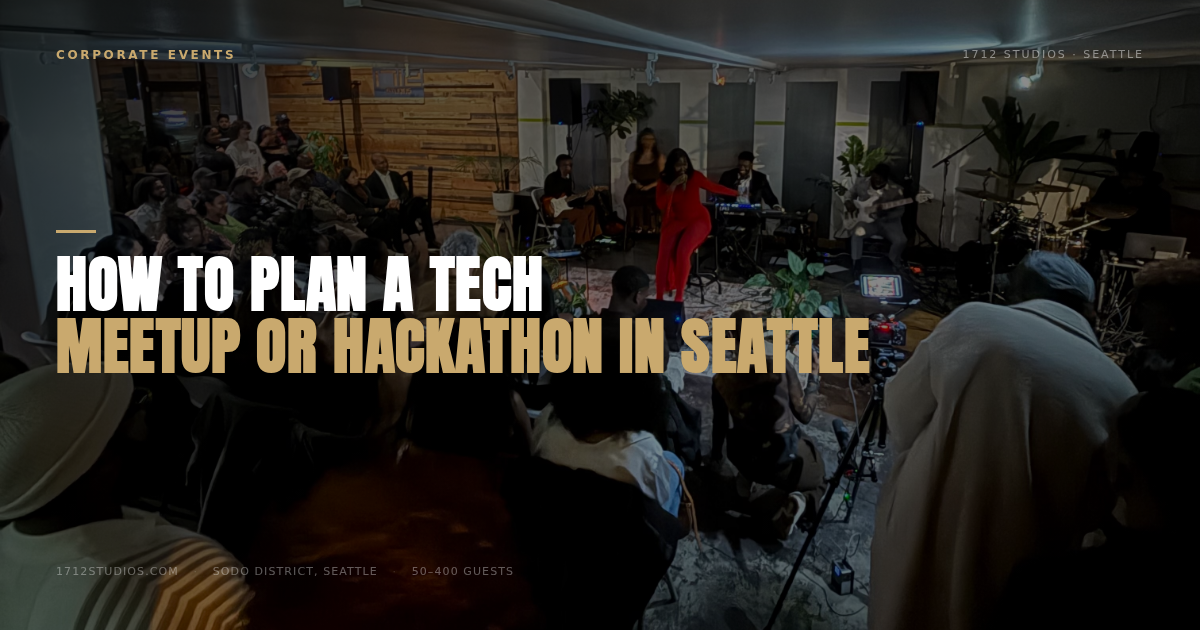
Seattle has one of the most active tech communities in the country. Between the established giants and a thriving startup ecosystem, there's no shortage of people who want to connect, build, and collaborate. But organizing a successful tech meetup or hackathon is a different skill set than attending one. If you get the logistics wrong, even the best speaker lineup or most creative hackathon prompt won't save you.
Here's a straightforward breakdown of what actually matters when planning a tech event in Seattle.
Define the Format Before You Book Anything
Tech meetups and hackathons have very different infrastructure needs. A casual networking meetup might just need open space, good WiFi, and somewhere for people to grab a drink. A 24-hour hackathon needs power access at every table, strong and reliable internet, breakout areas, and ideally a space that's available late into the night.
Get specific before you start making calls. How many people are you expecting? Will there be presentations or demos? Do teams need to work in separate zones? Do you need AV equipment for a keynote speaker? Answer these questions first, because they'll determine everything from the venue size to your catering setup.
Choosing the Right Venue in Seattle
Seattle venues vary wildly in what they offer and what they charge. Corporate event centers tend to be expensive and rigid. Restaurants and bars rarely have the layout or infrastructure for a working tech event. What most organizers end up needing is an industrial or flexible-use space that can be configured for their specific setup.
One venue worth knowing about is 1712 Studios, located at 1712 1st Ave S in Seattle's SODO district. It's a 6,000 square foot industrial warehouse space that holds between 50 and 400 guests, includes a full sound system, DJ booth, tables, chairs, and parking — all without surprise fees. For hackathons, the open floor plan is a major advantage because you can arrange it however your event demands. And because it's available until 2am, you're not getting kicked out at 10pm when your teams are hitting their stride.
What to Ask Every Venue Before Signing
- What's the maximum capacity and how does it change based on layout?
- What AV and sound equipment is included versus rented separately?
- What's the internet situation — and can it handle 100+ devices simultaneously?
- How late can you run the event?
- Are there hidden fees for staffing, cleaning, or equipment?
That last point matters more than people expect. Venues that quote a low base rate and then add fees for tables, chairs, parking, and cleanup can easily double your initial budget.
Logistics That Organizers Underestimate
Power and Connectivity
At a hackathon especially, participants will have laptops, monitors, phones, and peripherals all running simultaneously. You need enough outlet access to prevent people from sitting on the floor near a single power strip. Walk the space before your event and map out where power is available. Bring extension cords and surge protectors as backup.
WiFi is the other critical one. Most consumer-grade routers choke when 80+ devices connect. If the venue doesn't have enterprise-grade networking, talk to a local IT vendor about bringing in a temporary solution. It's not expensive and it eliminates one of the most common complaints at tech events.
Scheduling and Flow
Build buffer time into every transition — registration, breaks, demo sessions, everything. Tech events almost always run long, and if you've scheduled speakers back to back with no room to breathe, you'll be behind within the first hour. A good rule of thumb: add 15 minutes of buffer for every two hours of programming.
Food and Breaks
People focus better when they're fed. For multi-hour events, budget for at least one real meal and consistent snack access. For overnight hackathons, late-night food options are essential — and SODO has solid delivery coverage if you need it.
Promotion and Registration
Meetup.com, Eventbrite, and local Slack communities (Seattle Tech, Seattle Startups, etc.) are your best organic channels. Post early and follow up with a reminder 48 hours before the event. Set a realistic cap and use a waitlist — it creates urgency and gives you a buffer if RSVPs don't convert to attendance at your expected rate.
A Note on Venue Partners Who Make It Easier
The difference between a smooth event and a stressful one usually comes down to whether your venue is a partner or just a landlord. When a space like 1712 Studios includes sound, furniture, and parking in one flat price, you spend less time managing logistics and more time focused on the event itself. That matters a lot when you're also coordinating speakers, sponsors, and 200 attendees.
If you're organizing a tech event in Seattle, start with the venue — everything else gets easier once that's locked in.
Ready to Book Your Space?
1712 Studios is available for tech meetups, hackathons, product launches, and corporate events. Visit 1712studios.com to check availability, or call (206) 594-4809 to talk through your event needs directly. No runaround, no hidden costs — just a straightforward conversation about making your event work.