Pop-up fitness events are one of the best ways to grow your brand, build community, and generate revenue outside of a traditional studio model. But the logistics — finding a space, managing RSVPs, setting up equipment — can derail the whole thing if you're not prepared. Here's a straightforward guide to hosting a yoga or fitness pop-up in Seattle that actually runs smoothly.
Start With the Right Space
Your venue is the single biggest factor in whether your pop-up feels professional or thrown together. For a fitness event, you need square footage, good flooring or the ability to lay mats, adequate ventilation, and enough electrical capacity to run speakers and any equipment you're bringing in.
Most traditional event venues aren't designed with movement in mind. You want something open, with high ceilings and minimal obstructions. Industrial spaces tend to work well — they're flexible, they can handle the foot traffic, and they don't come with the rigid setup restrictions you'll find at banquet halls or hotel ballrooms.
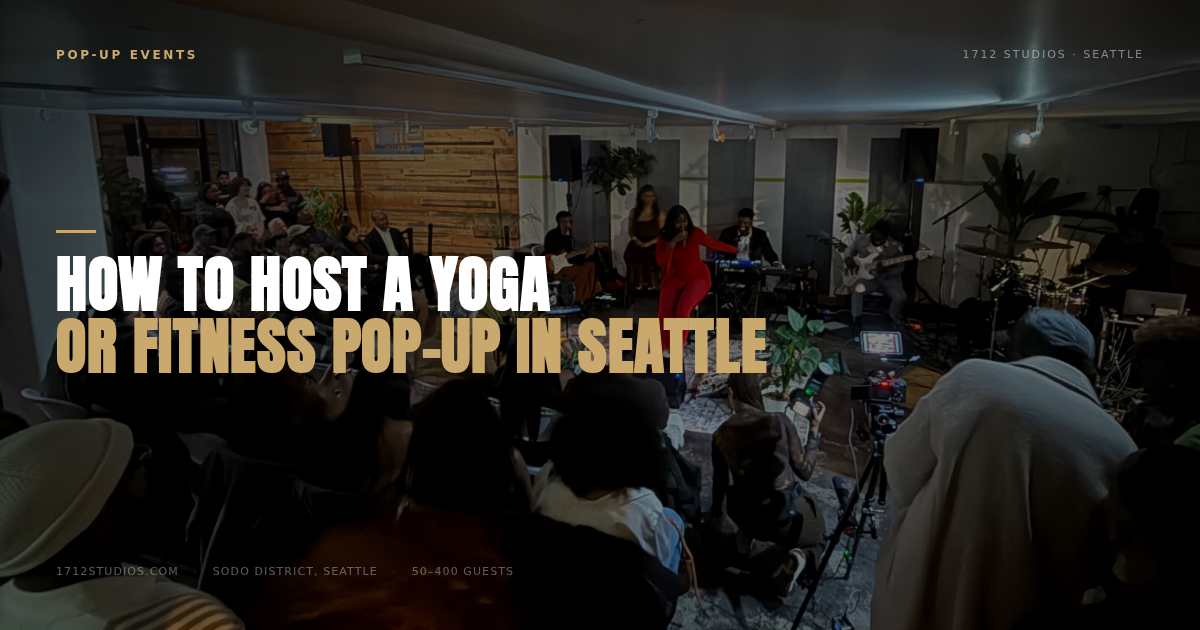
1712 Studios in Seattle's SODO district is a strong option for this. The space is 6,000 square feet of open warehouse, which gives you room to set up for anywhere from 50 to 400 guests depending on your format. It comes with a full sound system already built in, so if you're hosting a yoga flow with a live DJ or curated playlist, you're not renting additional gear or hoping a Bluetooth speaker cuts it for a crowd of 150 people.
Plan Your Format Before You Book Anything
Before you lock in a venue or set ticket prices, get specific about what you're actually running. A candlelit yin yoga class has completely different needs than a HIIT pop-up or a barre workshop with 80 people. Think through:
- How many participants you're targeting (minimum and maximum)
- Whether you need a stage or elevated platform for the instructor
- What equipment attendees bring versus what you provide
- How long the event runs, including setup and teardown time
- Whether you're selling tickets, running it as a free community event, or using it for brand partnerships
Having this figured out before you talk to a venue saves time and helps you negotiate accurately. Most venues charge by the hour, so knowing your real timeline — including the 90 minutes of setup that nobody budgets for — matters.
Handle Logistics Like a Pro
Sound and Music
Don't underestimate how much sound quality affects the experience. A fitness class with muddy audio or a speaker that cuts out halfway through a set kills the vibe. If your venue includes a built-in sound system — like the DJ booth and full audio setup at 1712 Studios — that's one less thing to rent, transport, and troubleshoot on the day of.
Parking and Accessibility
Seattle is not an easy city to park in, and attendees showing up stressed from circling the block are already in the wrong headspace for a wellness event. Prioritize venues that include on-site parking or are close to transit. It's a detail people notice more when it goes wrong than when it goes right.
Pricing and Fees
Surprise fees are the fastest way to blow your budget. Get every cost in writing before you sign — cleaning fees, overtime charges, equipment add-ons. Some venues price low upfront and layer costs on top. Others, like 1712 Studios, use all-inclusive pricing with no hidden fees, which makes it significantly easier to forecast your margins before tickets go on sale.
Promote It Early and Specifically
Generic event promotion doesn't work. "Yoga pop-up in Seattle" competes with everything. Get specific about who this is for and why they should come. Is it a power vinyasa class for experienced practitioners? A beginner-friendly flow designed for people who've never set foot on a mat? A recovery session aimed at runners training for a race?
Promote through channels where your actual audience is — local fitness Facebook groups, Instagram stories with a direct link to tickets, partnerships with local gyms or wellness brands who can share to their lists. Give people at least three to four weeks of lead time, especially if you're charging for tickets.
Day-Of Execution
Arrive earlier than you think you need to. Build in time for mat layout, sound checks, and the inevitable question you forgot to ask the venue. Have a clear check-in process so the first 15 minutes don't turn into a bottleneck. Assign someone — a friend, a volunteer, an assistant — to handle logistics while you focus on instructing.
The events that feel seamless to attendees are the ones where the organizer did the unglamorous prep work beforehand.
Ready to Book Your Pop-Up Space?
If you're looking for a flexible, well-equipped venue in Seattle that can handle a fitness or wellness event without the usual venue headaches, reach out to 1712 Studios. The space is available until 2am with a 4-hour minimum, includes tables, chairs, parking, and a full sound system — all at 1712studios.com or by calling (206) 594-4809.