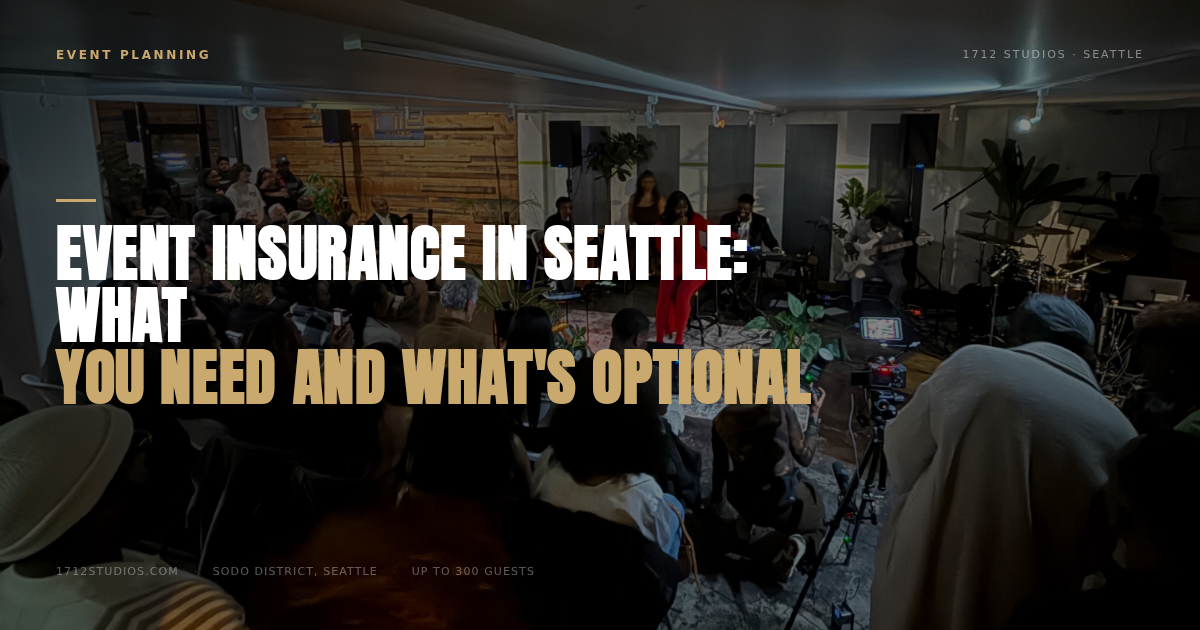
Event insurance is one of those topics people either ignore completely or overthink to the point of paralysis. Neither approach is great. If you're planning a private party, corporate event, or wedding in Seattle, here's a clear breakdown of what coverage actually matters, what's optional, and how to think about it before you book a venue.
Why Event Insurance Exists
Events involve a lot of moving parts: vendors, alcohol, large groups, rented spaces, and sometimes expensive equipment. If something goes wrong, whether it's a vendor no-show, a guest injury, or property damage, someone is responsible. Event insurance is how you make sure that responsibility doesn't become a financial disaster for you personally.
Most venues in Seattle will require you to carry at least some form of coverage. It protects them, and it protects you. Even when it's not required, it's often worth carrying anyway.
The Coverage Types That Actually Matter
General Liability Insurance
This is the one coverage that is almost universally required by venues. General liability covers bodily injury and property damage that occurs during your event. If a guest trips and falls, or something gets broken, this is what pays out.
For most private events in Seattle, you'll want a minimum of $1,000,000 per occurrence. Some venues require $2,000,000. Coverage typically costs between $75 and $200 for a one-day event, depending on the size and type of event. You can get it through event-specific insurers like Markel, NEXT Insurance, or through your existing homeowner's or renter's insurance policy if it allows event riders.
When you book a space like 1712 Studios in Seattle's SODO district, the venue will usually ask to be named as an additional insured on your policy. This is standard and takes about two minutes to arrange with your insurer.
Liquor Liability
If alcohol is being served at your event, liquor liability coverage is important. It covers claims related to alcohol-related incidents, such as a guest who drinks too much and causes an accident after leaving.
Many general liability policies for events include host liquor liability if you're not selling alcohol. If you're doing a hosted open bar, this is often bundled in. If a licensed bartender or bar service is handling sales, they should carry their own commercial liquor liability. Either way, confirm before your event date that this is covered and by whom.
Event Cancellation Insurance
This one is optional for most events, but worth considering for larger or more expensive ones. Cancellation coverage reimburses you for non-recoverable deposits and expenses if your event gets canceled or postponed due to circumstances outside your control, things like extreme weather, a venue fire, or a key vendor going out of business.
It does not cover you changing your mind. Read the policy conditions carefully before purchasing.
What You Probably Don't Need
Vendor Insurance
Your vendors, photographers, caterers, DJs, and florists should carry their own liability coverage. You shouldn't need to purchase coverage on their behalf. Ask each vendor for a certificate of insurance before confirming them. If they can't provide one, that's a red flag worth taking seriously.
Event Property Insurance
This covers your personal property and rented equipment during the event. It's useful if you're bringing in high-value items or renting expensive decor or AV gear. Most people don't need it because venues like 1712 Studios include tables, chairs, and a full sound system in the booking, which means there's less for you to worry about covering on that front.
How to Get Coverage Quickly in Seattle
You don't need a broker or weeks of lead time to get event insurance. Sites like NEXT Insurance, Markel Event Insurance, and WedSafe let you get a quote and purchase a policy online in under 30 minutes. Have your event date, venue address, expected guest count, and whether alcohol will be served ready to go.
Buy coverage at least a week before your event so there's time to send the certificate to your venue. Most venues need that documentation before your event date.
A Note on Venue-Provided Coverage
Some venues carry their own insurance that partially covers events on-site. This does not replace your need for general liability. The venue's policy protects the venue. Your policy protects you. These are two separate things, and you want both in place.
At 1712 Studios, security and bartenders are included in the six-hour event packages, which simplifies some of the liability considerations around crowd management and alcohol service. That said, renters are still expected to carry their own event insurance, as is the case at nearly every professional venue in Seattle.
Bottom Line
For most Seattle events, general liability insurance with host liquor liability is the baseline. Budget $75 to $200, purchase it online, and send the certificate to your venue at least a few days before your event. Everything else is situational.
If you're looking for a venue that's straightforward about what's included and what's expected, reach out to 1712 Studios at 1712studios.com or call (206) 594-4809. The team can walk you through exactly what documentation they need so you can check this box and move on to the fun part.