Most events in Seattle never get covered by local media. Not because they aren't interesting, but because the organizers never gave journalists a reason to show up. Getting press coverage is a skill, and like most skills, it comes down to knowing what you're doing before you start.
Here's a straightforward guide to getting your Seattle event featured in local blogs, newspapers, podcasts, and TV segments, without a publicist or a big budget.
Understand What Seattle Media Actually Wants
Journalists and editors aren't looking to do you a favor. They're looking for a story their audience will care about. Before you pitch anyone, ask yourself: why would a stranger in Seattle care about this event? If your answer is "because it's fun" or "because it's a good cause," you need to go deeper.
Local media responds well to events that have a clear hook, a first-ever, a notable name, a meaningful community angle, or a genuinely unusual concept. "Networking happy hour" is not a hook. "Seattle's first zero-waste fundraiser featuring local chefs competing live" is a hook.
Know Your Outlets
Seattle has a solid media ecosystem if you know where to look. The Seattle Times, Seattle Weekly, South Seattle Emerald, Capitol Hill Seattle Blog, Eater Seattle, and KOMO, KING5, and KIRO all cover local events, each with a different audience and angle. Crosscut leans toward civic and cultural stories. Eater wants food and drink. The South Seattle Emerald prioritizes community-driven events in underrepresented neighborhoods.
Do your research. Pitch the right story to the right outlet instead of blasting the same generic email to everyone.
Build Your Press Materials Before You Pitch
Showing up to a pitch without the right materials is like showing up to an event without a venue. Before you contact a single journalist, have these ready:
- A press release, one page, clear headline, the five W's in the first paragraph, and a quote from an organizer or partner
- High-resolution photos, of your venue, past events, speakers, or performers
- A media contact, one person journalists can reach quickly, who will actually respond
- Event details in plain text, date, time, location, ticket price, and a direct link
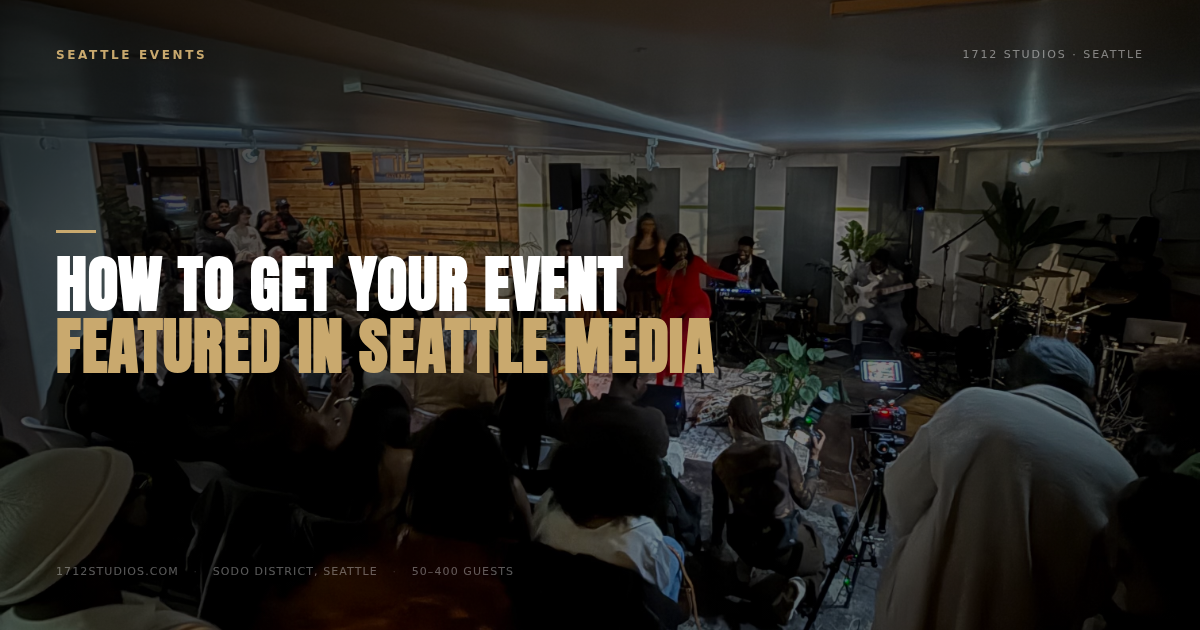
If you're hosting at a venue with a strong visual identity, somewhere like 1712 Studios in Seattle's SODO district, with its 6,000 sq ft industrial warehouse aesthetic, lean into that. Venue photos that photograph well give media outlets usable visual content, which makes your pitch more attractive.
Time Your Pitch Correctly
Timing is where most organizers lose. Pitching a journalist two days before your event is almost always too late. For print and digital editorial calendars, aim for two to three weeks out. For TV morning shows, which often plan community segments a week in advance, reach out seven to ten days before.
Send your pitch on a Tuesday or Wednesday morning. Avoid Mondays (journalists are catching up) and Fridays (they're wrapping up). Keep the subject line short and specific: "Seattle community art showcase, March 14, SODO" beats "Press opportunity for an amazing event you won't want to miss."
Follow Up Without Being Annoying
One follow-up email, sent three to four days after your initial pitch, is appropriate. After that, move on. Badgering journalists damages relationships you'll want later. If they didn't bite this time, make the next event easier to cover and try again.
Make the Event Easy to Cover On-Site
If a journalist or photographer does show up, your job isn't over. Have a media check-in point. Give them a printed one-pager with key names, titles, and talking points. Introduce them to your most quotable speaker or organizer immediately.
Venues that offer good logistics help here. 1712 Studios, for example, accommodates events of up to 300 guests and has built-in infrastructure, sound system, DJ booth, parking, that keeps the event itself running smoothly so organizers can actually focus on their guests and media instead of scrambling with logistics.
Build Relationships Between Events
The organizers who consistently get press coverage in Seattle aren't luckier than everyone else, they've built genuine relationships with local journalists over time. Follow the reporters who cover your space. Engage with their work. Send a thank-you note after coverage runs. When they need a source for a story about Seattle's event scene, you want your name to come to mind first.
Media coverage compounds. One good feature leads to credibility that makes the next pitch easier to land.
Ready to Host an Event Worth Covering?
Press coverage starts with an event that's genuinely worth talking about, and part of that is having the right space behind it. 1712 Studios is an all-inclusive industrial warehouse venue in Seattle's SODO district, available for events of up to 300 guests, with no surprise fees and availability until 2am.
Visit 1712studios.com to check availability, or call (206) 594-4809 to talk through your event.