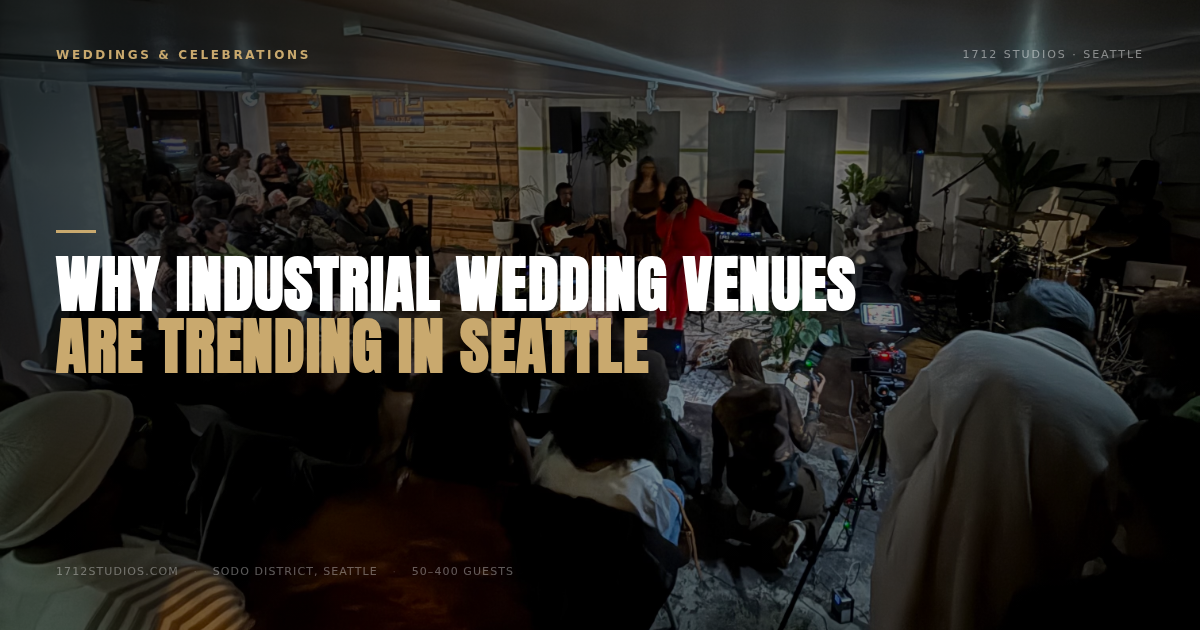
Seattle's wedding scene has shifted. Couples who used to default to hotel ballrooms and garden estates are now actively searching for raw, industrial spaces, warehouses, lofts, and converted commercial buildings that offer something those traditional venues simply can't: flexibility, character, and authenticity. This isn't a passing aesthetic phase. There are practical, financial, and creative reasons behind this trend, and they're worth understanding before you book anything.
What "Industrial" Actually Means in a Venue Context
When people say industrial wedding venue, they're talking about spaces built for function, not decoration. Think exposed steel beams, polished concrete floors, high ceilings, open floor plans, and large windows or loading dock doors. These buildings were originally designed for manufacturing, warehousing, or logistics, not weddings. That's exactly what makes them interesting.
The raw bones of an industrial space do something a traditional venue can't: they hand creative control back to the couple. There's no existing décor fighting your vision. No carpet pattern you have to work around. No predetermined layout telling you where the dance floor goes.
Why Seattle Couples Are Choosing These Spaces
The City Has the Supply
Seattle's industrial history runs deep. Neighborhoods like SODO, Georgetown, and SoDo contain pockets of mid-century warehouse buildings that have been preserved, renovated, and repurposed. That means couples in the Seattle area have real options, not just one or two novelty spaces, but a growing inventory of legitimate, well-equipped industrial venues built to host events at scale.
The Aesthetic Photographs Exceptionally Well
Photographers love industrial spaces because the textures are rich and the light behaves differently. Concrete bounces light softly. Steel creates dramatic contrast. High ceilings give photographers vertical range they don't get in a standard banquet hall. For couples who care about their wedding photos, and most do, an industrial venue delivers a visual environment that's genuinely hard to replicate.
Flexibility at Every Stage of the Night
Open floor plans mean you're not locked into someone else's room configuration. You can seat 200 guests for dinner, then open the floor for dancing without moving a single structural element. You can run a DJ booth in one corner and a live band on a stage at the other end. That kind of spatial freedom is rare in purpose-built event venues, where rooms are often segmented and rigid.
1712 Studios, located in Seattle's SODO district, is a strong example of this in practice. The 6,000 square foot warehouse layout accommodates up to 300 guests, which means the space works for an intimate ceremony and an all-out reception without feeling either cramped or cavernous. The included sound system and DJ booth mean couples aren't renting separately, the infrastructure is already there.
Transparent Pricing Is a Bigger Deal Than People Admit
One of the most consistent frustrations couples report with traditional wedding venues is the stacking of fees, service charges, setup fees, vendor restrictions, overtime penalties. Industrial venues, particularly independent ones, have largely moved away from that model. All-inclusive or flat-rate pricing structures are more common, and couples can actually build a budget that holds.
That matters in Seattle's market, where wedding costs have climbed steadily. Knowing your venue cost is your venue cost, no surprise line items after the fact, makes planning considerably less stressful.
What to Look for When Evaluating an Industrial Venue
Not every warehouse conversion is event-ready. Before you get attached to exposed brick and high ceilings, ask the hard questions: What's included in the rental? Is there adequate parking? How late can the event run? What's the load-in process for vendors? Is the HVAC system up to the task of 300 people dancing in August?
1712 Studios at 1712 1st Ave S addresses a lot of these directly, parking is included, the space is available until 2am, and there's six hour packages that gives couples real time to work with rather than a compressed window that rushes the night. These operational details matter as much as the aesthetics when you're actually running an event.
The Trend Has Legs
Industrial wedding venues aren't trending because couples saw them on Pinterest and wanted something different. They're trending because they solve real problems: pricing transparency, layout flexibility, and a visual environment that holds up on camera. In a city like Seattle, with the architecture, the creative couples, and the available inventory, it makes sense that these spaces have moved from niche to mainstream.
If you're in the early stages of venue research, it's worth adding at least one industrial space to your tour list before you commit to anything. The difference between reading about it and standing inside a well-built warehouse space is significant.
Ready to See the Space?
If you're planning a wedding in the Seattle area and want to see what an industrial venue actually looks like in person, 1712 Studios is worth a visit. Tour the space, ask questions, and get a real sense of what 6,000 square feet of open floor plan can do for your event. Start at 1712studios.com or call (206) 594-4809 to schedule a walkthrough.