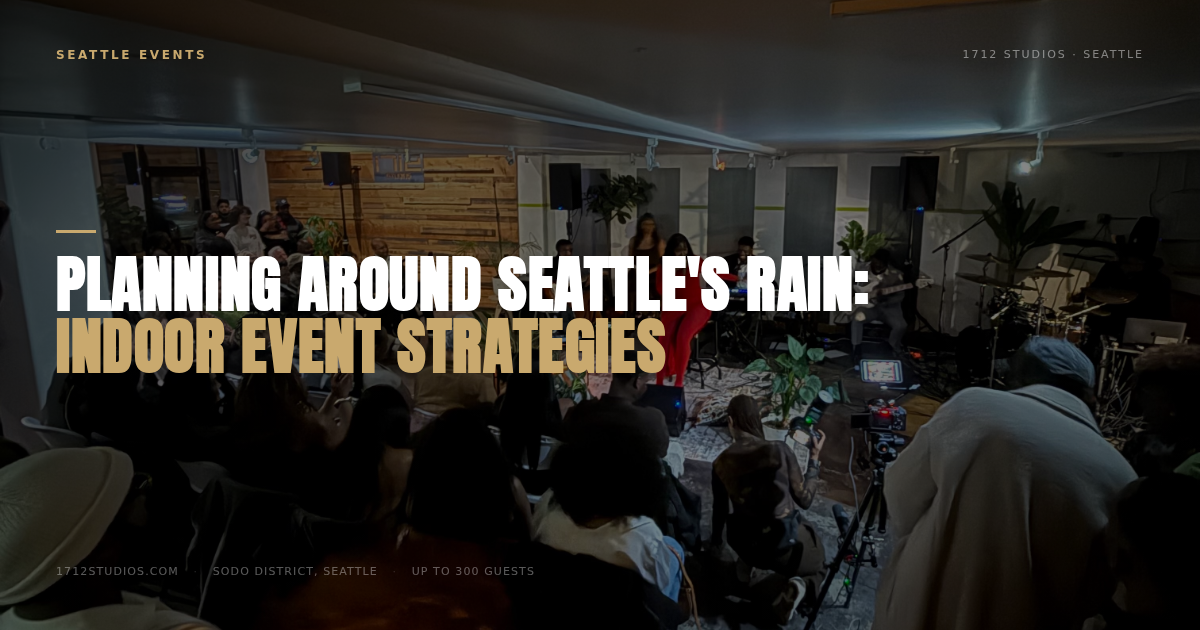
Seattle gets around 150 rainy days a year. If you're planning an event here, that's not a footnote, that's a central fact. Outdoor venues, rooftop spaces, and garden settings can look beautiful in photos, but one gray afternoon can turn a carefully planned celebration into a logistical scramble. The smarter move is to plan indoors from the start, and plan well.
Start With the Right Space
The first decision sets everything else. An indoor venue gives you weather certainty, but not all indoor spaces are equal. You want a venue that can flex with your guest count, handle your setup needs, and not nickel-and-dime you on every detail.
Look for spaces that include the basics without add-on fees. Tables, chairs, sound equipment, and parking should be part of the deal, not separate line items. A lot of Seattle venues charge service fees or per-guest minimums that inflate your final cost well past the listed rate. Know what you're actually paying before you sign anything.
1712 Studios, located in Seattle's SODO district, is a good example of a venue that keeps pricing straightforward. Six-hour packages start at $1,750 and include bartenders, security, full sound system, DJ booth, tables, chairs, and parking. No service charge, no per-guest fee, no food and drink minimum. For a city where hidden costs are common, that kind of transparency matters.
Build Your Layout Around Flow
Indoor events succeed or fail on layout. When guests can't find the bar, can't hear the speeches, or feel cramped near the entrance, the experience suffers regardless of how well everything else was planned.
Zone Your Space Intentionally
Think about where people arrive, where they gather, and where they'll spend most of their time. Separate the high-energy areas from the quieter ones. If you have multiple rooms available, use them purposefully. A secondary room for a cocktail hour or a lounge setup can reduce crowding in the main space and give guests somewhere to go when they need a break from the noise.
Account for Wet Weather Arrivals
This is Seattle specific. Guests will be coming in with wet coats, umbrellas, and damp shoes. Plan for a coat check or a designated drop area near the entrance. Put it in your event timeline so it doesn't become an afterthought. If guests have nowhere to put their stuff, it ends up on chairs and tables, and that creates clutter fast.
Lighting and Atmosphere Do More Than You Think
On a rainy Seattle afternoon or evening, the right lighting transforms a space. Industrial venues in particular, with their exposed ceilings and concrete floors, respond well to warm, layered lighting. String lights, uplighting, and strategic use of candles or LED fixtures can shift the mood dramatically without a major production budget.
If you're working with a venue that has a DJ booth and sound system already in place, coordinate with your DJ or music provider early. Sound and lighting are the two fastest ways to set the tone of an indoor event, and they're the two things most commonly left until the last week of planning.
Timing Your Event Around Seattle Weather Patterns
Seattle weather is most unpredictable in late fall and early spring. If you have flexibility, consider booking in summer or early fall when dry stretches are more reliable, even if you're fully indoors. Better weather means easier parking, more comfortable arrivals, and guests who show up in a better mood.
If your date is fixed, build buffer time into your setup schedule. Vendors dealing with rain take longer to load in. Guests arrive in clusters rather than steadily. Give yourself at least 30 extra minutes of setup time in winter months.
Make the Most of Late Hours
One advantage of indoor venues in Seattle is that you can run later without weather being a factor. If your venue allows events until 2am, use that flexibility. Spreading your event over a longer window reduces crowding, gives your timeline more room to breathe, and lets guests who arrive late still have a full experience.
1712 Studios is available until 2am, with capacity for up to 300 guests across three rooms, including the Main Hall, the Speakeasy upstairs, and the Back Venue. That kind of flexibility makes it easier to structure an event that doesn't feel rushed, which is exactly what you want when you're already managing weather-related logistics.
The Bottom Line
Seattle rain is not a reason to stress. It's a reason to plan indoors, plan clearly, and choose a venue that makes the logistics simple. Lock in your space, build your layout around how people actually move, handle the weather arrival details early, and give yourself enough time to set up properly.
If you're looking for an indoor event space in Seattle with transparent pricing and no surprise fees, visit 1712studios.com or call (206) 594-4809 to check availability and get your questions answered directly.