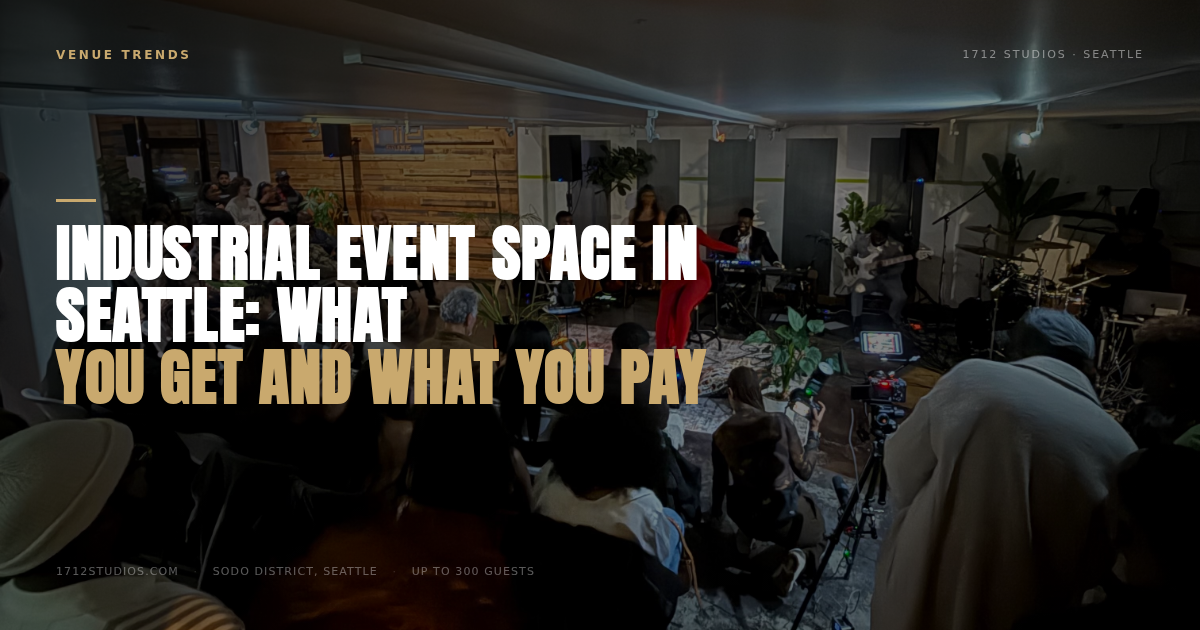
If you are searching for industrial event space in Seattle, you have probably already noticed that the aesthetic is easy to find and the pricing is not. Most venues list a starting rate and leave the rest to a sales call. This post lays out exactly what to look for, what questions to ask, and what realistic numbers look like so you can compare venues on equal footing before you commit to anything.
Why Industrial Event Space in Seattle Works for So Many Event Types
Warehouse and industrial venues became popular for a simple reason: they are blank slates. Exposed brick, concrete floors, high ceilings and open floor plans do not compete with your decor, your lighting or your brand. That flexibility makes the same room work for a corporate product launch, a wedding reception, a birthday party and a fundraiser gala without feeling wrong for any of them.
Seattle has a solid concentration of industrial buildings that have been converted into event spaces, particularly in neighborhoods like SODO, Georgetown and SoDo adjacent pockets near the stadiums. If you are hosting guests who are coming from downtown or using light rail, SODO is especially convenient. It sits right off the 1 Line and has surface parking, which is not something every Seattle venue can offer.
Capacity: Know the Real Numbers Before You Fall in Love with a Space
Venue websites often list a single large capacity number. What that number usually means is the legal fire code maximum with nothing in the room. Add a DJ setup, a bar, tables, chairs, a dance floor and a photo booth and that number shrinks fast. When you tour a space, ask for the seated capacity with round tables, the standing capacity with a bar and dance floor, and the capacity for a cocktail-style event with no assigned seating.
As a worked example: 1712 Studios in SODO is a 6,000 square foot warehouse venue with three distinct rooms. The Main Hall holds up to 120 guests. Configure two rooms together and you can reach 250. Use the full building and you are at 300. That kind of breakdown tells you something useful. It means a party of 80 fits differently than a party of 240, and the venue has a real answer for both rather than squeezing everyone into one configuration.
Questions to Ask About Capacity
- What is the seated dinner capacity with standard round tables?
- Does that number change if I add a stage or a DJ booth?
- Is there a minimum guest count I have to meet?
- Can I rent only part of the venue if my group is small?
Pricing: What the Rate Actually Covers
Flat rental rates are rarely the whole story. The number a venue quotes you at first contact is often a base room fee. On top of that you may encounter a service charge, a per-guest fee, a food and beverage minimum, a separate security deposit, charges for tables and chairs, and fees for setup or breakdown hours. By the time you add everything, the real cost can be double the advertised rate.
When you are comparing options, the most useful question is: what is the total amount I will owe on the day of my event, assuming I bring my own food vendor and I hit my expected guest count? That answer should not require a spreadsheet.
At 1712 Studios, the six-hour packages include bartenders, security, a full sound system, a DJ booth, tables, chairs and parking. There is no service charge, no per-guest fee and no food and drink minimum. Rates run from $1,750 Sunday through Thursday, $1,950 on Friday and $2,950 on Saturday. If you need flexibility on a weekday, hourly rental is available Monday through Thursday with a two-hour minimum and no bar service. You can review the full package details on their venue page to see exactly what each option covers.
Questions to Ask About Pricing
- Is there a service charge or administrative fee on top of the rental rate?
- Are tables, chairs, and basic AV included or are those add-ons?
- Is security required and is it included in the rate?
- Is there a food or beverage minimum I have to hit?
How Late Can the Event Run?
This matters more than people expect. If the venue closes at midnight and you are planning a reception that starts at 7pm, you have five hours. That sounds fine until you factor in a one-hour cocktail period, a 30-minute dinner delay and a 20-minute speech. You can burn through five hours before the dance floor really opens up.
Seattle venues vary widely on end times. Some stop serving alcohol at midnight and clear the room by 12:30am. Others allow events to run later. 1712 Studios is available until 2am, which gives you real flexibility to let an evening event breathe without watching the clock from the moment guests arrive.
Catering and Alcohol
Industrial warehouse venues typically fall into one of three categories when it comes to food and drink: they have an in-house catering operation you are required to use, they have a preferred vendor list you must choose from, or they are open to outside caterers. The first option simplifies planning but limits your choices and often costs more. The second gives you some flexibility. The third gives you full control.
For alcohol, most venues either operate their own bar with their own staff or require that any alcohol service go through a licensed bartender they provide or approve. Washington State has specific rules around liquor licensing and liability, so venues that handle bar service in-house are generally managing that compliance on their end, which removes a complicated piece of the planning from your plate.
When you evaluate any venue, ask whether you can bring your own licensed caterer, whether the venue supplies bartenders or whether you source them separately, and whether there is a corkage fee or a beverage minimum if you supply your own alcohol.
Parking in SODO and Getting There
Parking is genuinely worth evaluating before you book, especially for events over 100 guests. In neighborhoods like Capitol Hill or South Lake Union, street parking is limited and paid lots fill up. SODO has a different character. The area around 1st Avenue South tends to have more surface lots and street availability, particularly on evenings and weekends when the stadium crowds from Lumen Field or T-Mobile Park have cleared out.
1712 Studios includes parking with every event, which is a meaningful convenience that is not universal among Seattle venues. For guests coming by public transit, the light rail stops in SODO are walkable from the venue, which helps if you are expecting guests from the east side or the airport corridor.
How to Book a Warehouse Venue in Seattle
Once you have narrowed your options, most venues will ask you to do a site tour before they hold a date. Bring your event details: guest count, event type, start and end time, and whether you are bringing outside vendors. Venues want to know you are a serious inquiry, and walking in with that information ready moves the process faster.
Ask about deposit amounts, cancellation policy and what happens if your guest count changes after you sign. Those three things are where most booking disputes originate, and understanding them upfront saves a difficult conversation later.
If you are planning an event in Seattle and want a straight look at what a warehouse venue actually costs and includes, visit the 1712 Studios venue page for complete package information or call them directly at (206) 594-4809.